Zeynep Portway – Two questions come up more than any others: “Why does it seem like everyone experiencing homelessness struggles with mental illness or substance use?” And, “Why doesn’t it seem like anything is being done?”
The answer to both is simpler than it sounds: because those are the people we see.
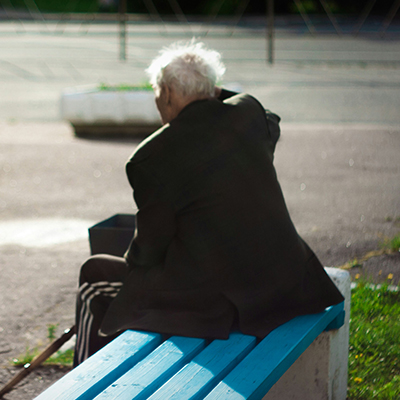
The most visible people experiencing homelessness are often those with the highest and most complex needs. They sleep on sidewalks, in front of businesses, at bus stops, or in the woods because they have nowhere else to go. They carry everything they own in a backpack, a suitcase, or a shopping cart because there is no safe place to leave it behind. They are also disproportionately likely to be living with untreated mental illness, substance use disorders, chronic health conditions, or years of compounded trauma. Their visibility shapes public perception — but visibility is a function of scarcity, not prevalence. When a community doesn’t have enough shelter and housing to meet the need, people don’t disappear. They become highly visible instead.
That visibility gets mistaken for the whole story. It isn’t.
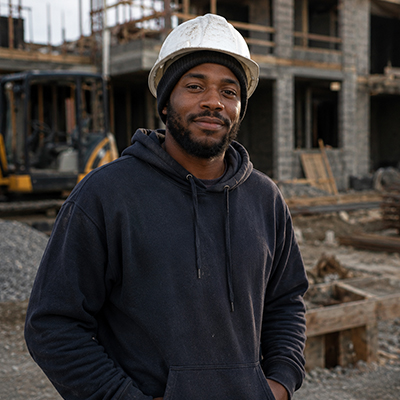
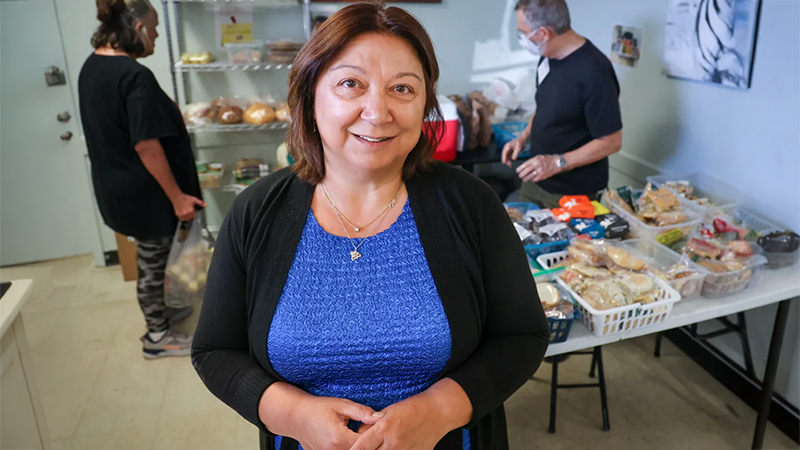
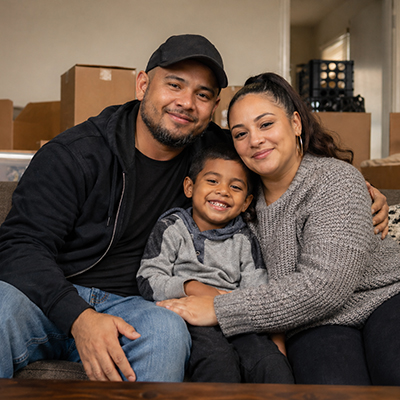
Every day at Samaritan Resource Center, we see rising numbers of families, seniors, veterans, and working individuals experiencing homelessness that most people never notice. They’re sleeping in their cars. Rotating between friends’ couches until the welcome wears out. Spending nearly all of their income on extended-stay hotels, caught in a cycle that makes it mathematically impossible to save enough for permanent housing. They go to work. They get their kids to school. They do everything they can to avoid becoming visible. They are homeless too — they just don’t fit the picture the public has learned to recognize.
This distinction matters because it shapes how we assign cause and effect. A person who has been unsheltered for months, without adequate sleep, safety, or hygiene, will often show visible signs of that deprivation — behavior read as erratic, or substance use as a coping mechanism. We are, in many cases, watching the symptoms of prolonged exposure and systemic failure, and mistaking them for the cause. This isn’t a denial that mental illness and substance use are real factors for some. It’s a call to be precise about which came first. Stable housing is consistently a precondition for recovery and stability, not a reward for having already achieved it. When we withhold housing until someone “proves” they’re ready, we all but guarantee the deterioration later used to justify withholding it in the first place.
Imagine how different the conversation might be if everyone had a safe place to sleep. We would likely see fewer people on sidewalks, fewer people carrying their belongings everywhere they go, fewer individuals in visible crisis on street corners — and far fewer opportunities to reinforce the stereotypes that have come to define homelessness in the public eye.
It’s easy — and it’s a cop-out — to conclude that nothing is changing, that government and nonprofits aren’t making a difference. That conclusion is understandable. It’s also incomplete. Every day, people are being housed. Families are avoiding eviction. Individuals are finding employment, accessing mental health care, reconnecting with family, and rebuilding their lives. Those successes rarely make headlines, for the same reason the families in cars and hotel rooms don’t: they’re no longer visible once things start working.
Homelessness isn’t caused by a single issue, and it won’t be solved by a single solution. It’s the product of housing shortages, rising costs, inadequate behavioral health resources, stagnant wages, domestic violence, family breakdown, aging, and disability — layered and compounding. Reducing it takes coordinated effort across government, healthcare, business, faith communities, nonprofits, and neighbors.
Blaming the people we can see offers a simple explanation. It solves nothing. If we want to actually end homelessness, we have to look past the stereotype and see the full picture — the visible and the hidden alike. Only then can we start addressing causes instead of judging consequences.